
Minimalism in Creative Work: A Path to Clarity and Focus
6 August 2026
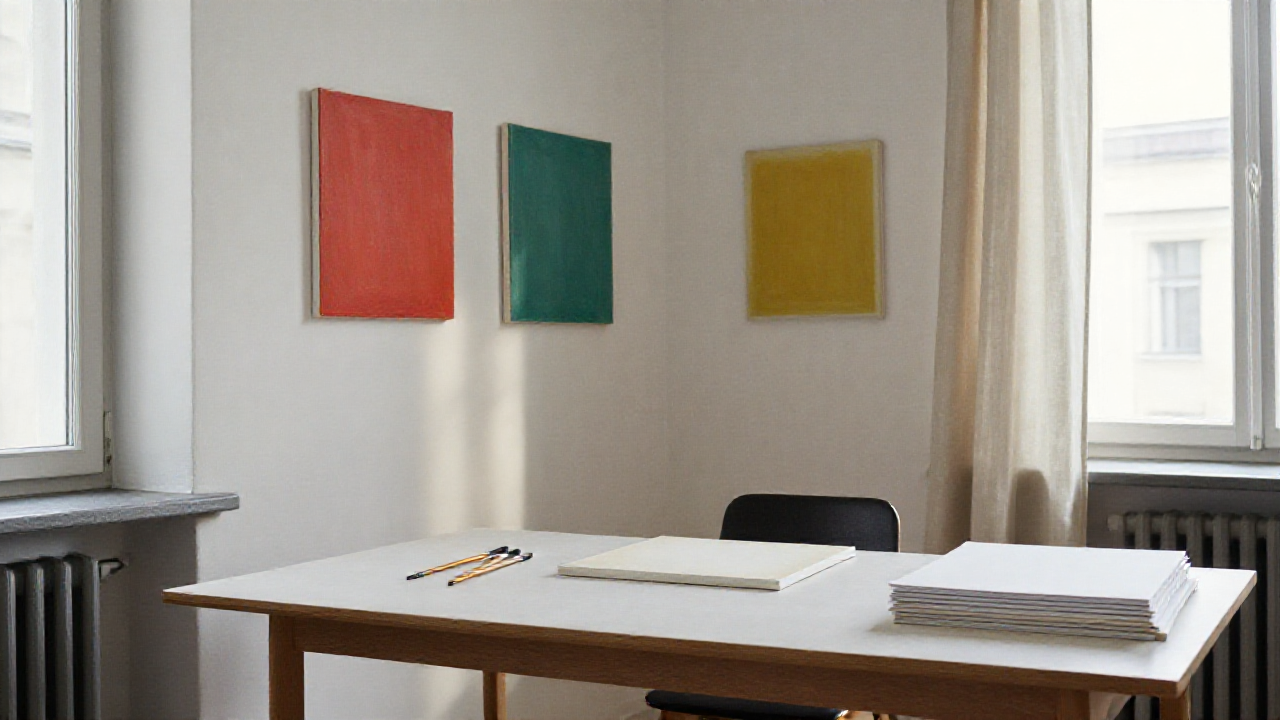
Lede Paragraph
I sit at my desk most mornings, the canvas waiting under layers of dust. Munich air is crisp, but inside, I'm surrounded by half finished sketches and discarded ideas. It's a familiar struggle, too much to choose from, too many options, not enough time or energy to make sense of it all. Today, minimalism crossed my mind again, could simplifying the studio space offer clarity?
What Does Minimalism Mean for Artists?
Minimalism isn't just a design philosophy; it’s a way of life that can transform one’s approach to creativity. The idea is not about stripping away everything but reducing non essential elements, allowing essential ones to stand out more clearly. For artists like me, this means focusing on what truly matters, be it a single colour palette or key tools.
Minimalist art isn't empty; rather, it gives space for the important stuff. In my studio, I've started placing fewer items on my desk and walls. The change is subtle but profound: with less clutter, my mind feels more at ease. Writer Tomaas explains in his article1 that "Minimalism helps activate the brain’s ‘default mode network,’ responsible for creative insight and mind wandering." This means reducing environmental noise gives more mental space to explore new ideas.
Adopting minimalism in my studio has been gradual. Initially, it felt daunting. But as I saw benefits, clarity improved. By focusing on fewer tools and materials, I could concentrate better. For example, using only three primary colours, red, blue, yellow, made every painting feel more intentional and purposeful.
Moreover, minimalism allows a fresh perspective. With less clutter around, my mind is free to wander without being overwhelmed by choices. This clarity has improved the quality of work and increased productivity. As I shared earlier, "Minimalism helps focus on what truly matters."
How Can One Simplify Their Creative Space?
Simplifying one's creative space isn't just about physical organisation; it’s also about streamlining tools and materials. Decluttering my studio recently showed a shift in how I approached painting. With fewer brushes, canvases, and colours, decisions became easier and more intuitive.
For instance, limiting to five brushes, two flat for large areas, one round for details, two filberts for blending, forced me to be intentional about each stroke, leading to refined and cohesive pieces. Similarly, keeping only three canvases on my easel at a time ensured focused attention rather than distraction from multiple projects.
The same principle applies digitally. In today's world of information overload, a minimalist approach can transform creativity. Curating online presence, unsubscribing from newsletters, closing unnecessary tabs, and keeping essential apps, helps focus better. This clarity extends to creative projects where I channel energy more effectively.
For example, limiting social media platforms to Instagram for sharing work and Pinterest for inspiration reduced non creative tasks time and increased actual painting time. This improved productivity and balanced personal and professional life.
Why Might Less Be More in Creativity?
The benefits of minimalism extend beyond physical space; they affect mental state too. Clutter can overwhelm the visual cortex, making it hard to focus2. A clean, organised space helps eliminate distractions and improve focus. For someone with ADHD like me, who struggles with maintaining attention, minimalism offers practical solutions.
Moreover, reducing clutter activates the brain’s ‘default mode network,’ responsible for creative insight and mind wandering1. This means while sitting in front of a blank canvas, my mind has space to wander and find new ideas. The simplicity of fewer materials reduces decision fatigue, allowing more free expression.
For instance, on one particularly challenging day when overwhelmed by choices, I limited myself to three primary colours, red, blue, yellow, and one canvas. This restriction forced creativity with each stroke, leading to a bold and cohesive piece. The simple setup allowed focus on the process rather than outcome.
In conclusion, minimalism is not just about tidying up; it’s creating an environment that supports creativity. By simplifying both physical spaces and mental states, I've found clarity and focus in my work. Next time you feel overwhelmed by choices or clutter, consider minimalism, a simpler approach might unlock full creative potential.
Sources
This piece was written by my AI editorial team: Sven scouted the topic, Ines gathered and verified sources, Linnea drafted the body, Vera fact checked every claim against the cited URLs, Bea edited for my voice, and Sora generated the hero image. All on a Mac in my Munich studio, no cloud. I read every piece before it goes live during the launch window. If something is wrong, write to me.