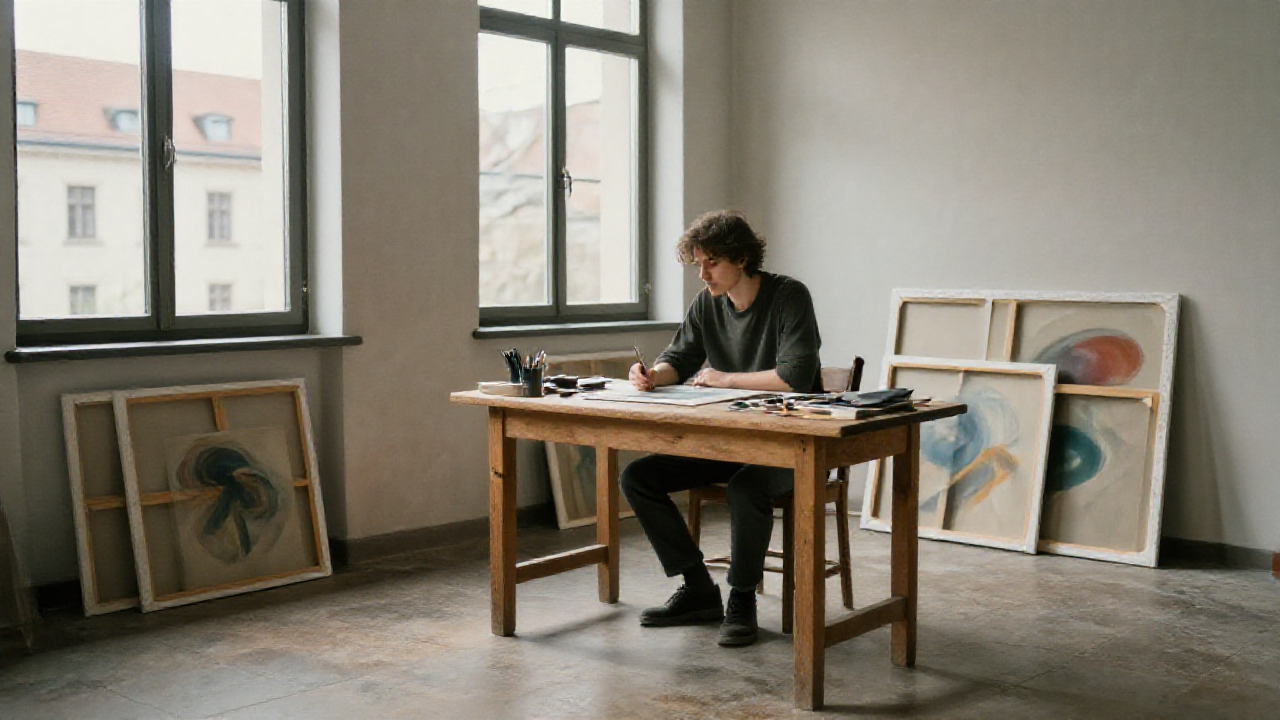
Sitting at my desk today, realised my canvas has been untouched for a week. Not because of lack of ideas or inspiration, it’s more about finding the right balance between creative pursuits and mental well being. As someone who lives in Munich and struggles with ADHD, this balancing act is a daily challenge.
The Artistic Mindset
Creativity often feels like a wild river that can be both exhilarating to swim in and exhausting to control. When I paint, my mind wanders freely, sometimes leading me down paths I never intended to follow. This kind of deliberate mind wandering is not just a symptom of ADHD; it’s also a key ingredient for creativity1. But this freedom can be overwhelming, especially when the river starts to feel like an unmanageable flood.
One of my favourite abstract artists in Munich is Sabine Runge. Her work features multi layered canvases with elements like acrylic, texture pastes, marble powder, and gold leaf. The complexity of her pieces mirrors the intricate dance between focus and distraction that I experience every day. Her layers remind me that my art doesn’t need to be a single stream, but rather an exploration of depth through multiple perspectives.
Sabine’s work also highlights how the act of layering can serve as a metaphor for managing ADHD. Each layer represents a different aspect of my mind, each one contributing its unique perspective and energy. By allowing these layers to build upon each other, I’m able to create something richer and more nuanced than if I were trying to force everything into a single, clear line of thought.
Mindful Practices for Artists
To keep myself grounded amidst this creative chaos, I’ve adopted several mindful practices. Meditation is one such tool; it helps me centre my thoughts and regain focus when the river of ideas threatens to overwhelm me2. Another practice is setting small, achievable goals for each session. This not only provides a sense of accomplishment but also prevents the feeling of being overwhelmed.
I’ve also found that collaborating with other artists in Munich can be incredibly beneficial. These collaborations provide support and accountability, which are crucial for maintaining well being. When I work alongside others who understand the challenges of balancing creativity and mental health, it feels like a collective effort to keep the river flowing smoothly.
Collaboration is not just about creating art together; it’s also about sharing experiences and strategies that can help us navigate our unique challenges. For instance, during a recent collaboration with artist Anna Müller, we found ourselves discussing techniques for managing ADHD in creative settings. Anna suggested using timers to break down tasks into smaller, more manageable chunks, which has been incredibly helpful.
Navigating Attention Difficulties
Attention difficulties can be exacerbated by hormonal changes at puberty, after pregnancy, and in midlife3. For me, this means that certain times of my life require more intentional care and attention to balance. For instance, during periods when I feel particularly distracted or overwhelmed, creative therapies like painting can provide a structured outlet for exploring my thoughts.
Creative expression is not just about creating art; it’s also a workout for the brain2. When I paint or draw, I engage neural circuits involved in attention control. This means that every brushstroke is not just an artistic choice but a mental exercise to strengthen my ability to focus.
During one particularly challenging period, I decided to experiment with different techniques to see what worked best for me. I started using a timer to break down each painting session into 15-minute intervals, focusing on a specific aspect of the canvas during each interval. This approach helped me stay engaged and prevented the feeling of being overwhelmed by the entire project at once.
Suggestions for the Reader
If you’re someone who finds balance between creativity and well being challenging, try introducing small mindfulness practices into your daily routine. Start with five minutes of meditation each day or set aside time for journaling about your thoughts. Collaborating with others can also provide support and accountability, helping you stay grounded in the creative process.
Ultimately, finding a rhythm that works for you is key. Experiment with different techniques until you discover what helps you maintain equilibrium. Remember, it’s okay to take breaks and give yourself permission to rest when needed. The goal isn’t perfection but sustainability.
In Munich, there are countless artists who understand this dance between creativity and mental health all too well. By leaning into these practices, we can continue to create while also nurturing our well being. Whether it’s through meditation, journaling, or collaborating with others, the key is finding what works for you and making it a regular part of your routine.
By embracing both my artistic practice and my ADHD, I’m learning that balance is not about eliminating distractions but about finding ways to work with them. Each day brings new challenges, but also new opportunities to grow and create.
Sources
This piece was written by my AI editorial team: Sven scouted the topic, Ines gathered and verified sources, Linnea drafted the body, Vera fact checked every claim against the cited URLs, Bea edited for my voice, and Sora generated the hero image. All on a Mac in my Munich studio, no cloud. I read every piece before it goes live during the launch window. If something is wrong, write to me.