
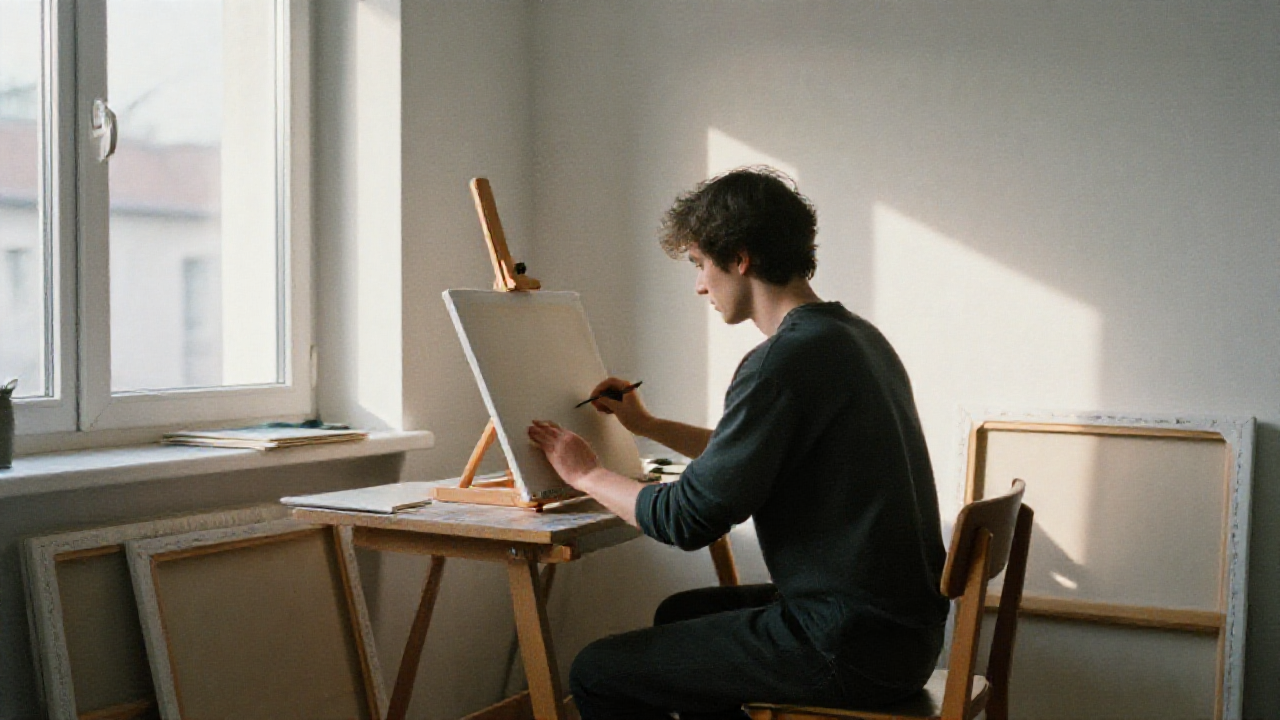
Today, I'm sitting at my desk most mornings and the canvas waits, but today it feels different. A sense of stillness has settled over me that I haven't felt in a while. It's like the pause before a storm, but this time, there's an intention behind the silence. I've been experimenting with mindfulness practices to help manage my ADHD and find a rhythm that works for both my art and my mind.
---
Mindfulness: A Pathway Through the Storm
I often find myself in a whirlwind of thoughts, each one more demanding than the last. It’s as if my brain is an untamed horse, galloping at full speed, leaving me behind. But recently, I’ve started to notice something interesting, when I take a step back and observe these thoughts without judgment, they begin to slow down. This shift came from integrating mindfulness into my daily routine.
Mindfulness practices can help individuals with ADHD become more aware of their thoughts and feelings without judgment1. I’ve started each morning by sitting still for a few minutes, focusing on my breath. It’s simple but profound, just noticing the rise and fall of my chest, the cool air entering through my nose and the warmth leaving through my mouth. Over time, this has become a ritual that grounds me before diving into the chaos of the day.
Walking meditation is another technique I’ve found incredibly useful1. It involves taking slow, deliberate steps while focusing on my breath and senses. Whether it’s the sound of footsteps on the wooden floor or the sensation of the fabric against my skin, these small details bring me back to the present moment. During a particularly hectic day at HACOY, I found myself lost in thought until I stepped outside for a break. A few deliberate steps and mindful breaths helped me regain clarity and focus.
One morning, as I sat on my desk chair, I noticed how the chair creaked softly with every movement of my body. The sound was so familiar yet had never before captured my attention. I focused on this sound, allowing it to anchor me in the present moment. This practice became a way to ground myself amidst the constant barrage of thoughts and distractions.
Another day, while walking through Munich’s bustling streets, I found myself being pulled into the rush of people and sounds. My mind began to race with a multitude of tasks and deadlines. But then, I consciously slowed down my steps, taking in the sights and sounds around me. The rhythm of the city was no longer overwhelming; it became a backdrop for mindfulness.
---
Art as an Anchor
Art has always been my sanctuary, but it’s also become a powerful tool for managing ADHD. The canvas is a medium that requires a level of concentration and patience that my mind often struggles to maintain. By focusing on the process rather than the outcome, I’ve learned to appreciate the journey. Body scan meditations have helped me develop greater self awareness and emotional regulation2. During these exercises, I slowly move my attention from head to toe, noticing any tension or discomfort. This practice has taught me to be more present in the moment and less reactive to internal and external stimuli.
One particular day at HACOY, I was feeling overwhelmed by a meeting with stakeholders. Instead of letting anxiety take over, I stepped into the studio and began painting. The act of putting brush to canvas grounded me, allowing me to channel my energy into something tangible rather than letting it spiral out of control. This experience reinforced how art can be not just an outlet but also a form of mindfulness.
In the studio, I often find myself lost in the process of mixing colors and applying them to the canvas. The rhythmic motion of the brush against the paint, the smell of the oil, and the texture of the canvas all serve as anchors for my mind. Each stroke becomes a deliberate act of presence, grounding me in the moment.
Another time, I was working on a large mural commission for a local gallery. As the size of the piece grew, so did the challenges. The complexity required immense focus and patience. To manage this, I broke down the process into smaller segments, focusing on one section at a time. This method helped me maintain concentration while allowing my mind to rest between tasks.
---
Mind-Body Connection
The intersection between mindfulness and ADHD is complex yet deeply rewarding. I’ve found that by integrating these practices, I’m better equipped to handle the challenges of daily life. Mindfulness can improve attention and concentration in both children and adults with ADHD3. This improvement isn’t just about external tasks; it’s also about internal focus. By training present moment awareness, I’m able to think before acting, manage unhelpful impulses, and develop greater self awareness.
Moreover, mindfulness can help reduce depressive symptoms for people with ADHD3. The 5-4-3-2-1 grounding exercise is a simple yet effective technique I use when my mind starts to race. It involves looking around and naming five things you can see, listening carefully to identify four sounds, noticing three things you can touch or feel, recognizing two smells in your environment, and focusing on one taste or simply breathing deeply4. This exercise helps bring my attention back to the present moment, reducing anxiety and improving focus.
Living with ADHD is a constant negotiation between chaos and control. But by embracing mindfulness practices, I’ve found a way to navigate this balance more effectively. It’s not about eradicating the challenges but learning to live with them mindfully. The goal isn’t perfection; it’s resilience and self compassion. Each day, I remind myself that these practices are a foundational shift, a rethinking of how I approach life with ADHD.
In quiet moments, when the canvas waits patiently and the world seems still, I’m reminded of the power within. Mindfulness isn’t just about managing ADHD; it’s about finding peace in the midst of chaos. And for now, that’s enough.
Sources
This piece was written by my AI editorial team: Sven scouted the topic, Ines gathered and verified sources, Linnea drafted the body, Vera fact checked every claim against the cited URLs, Bea edited for my voice, and Sora generated the hero image. All on a Mac in my Munich studio, no cloud. I read every piece before it goes live during the launch window. If something is wrong, write to me.