
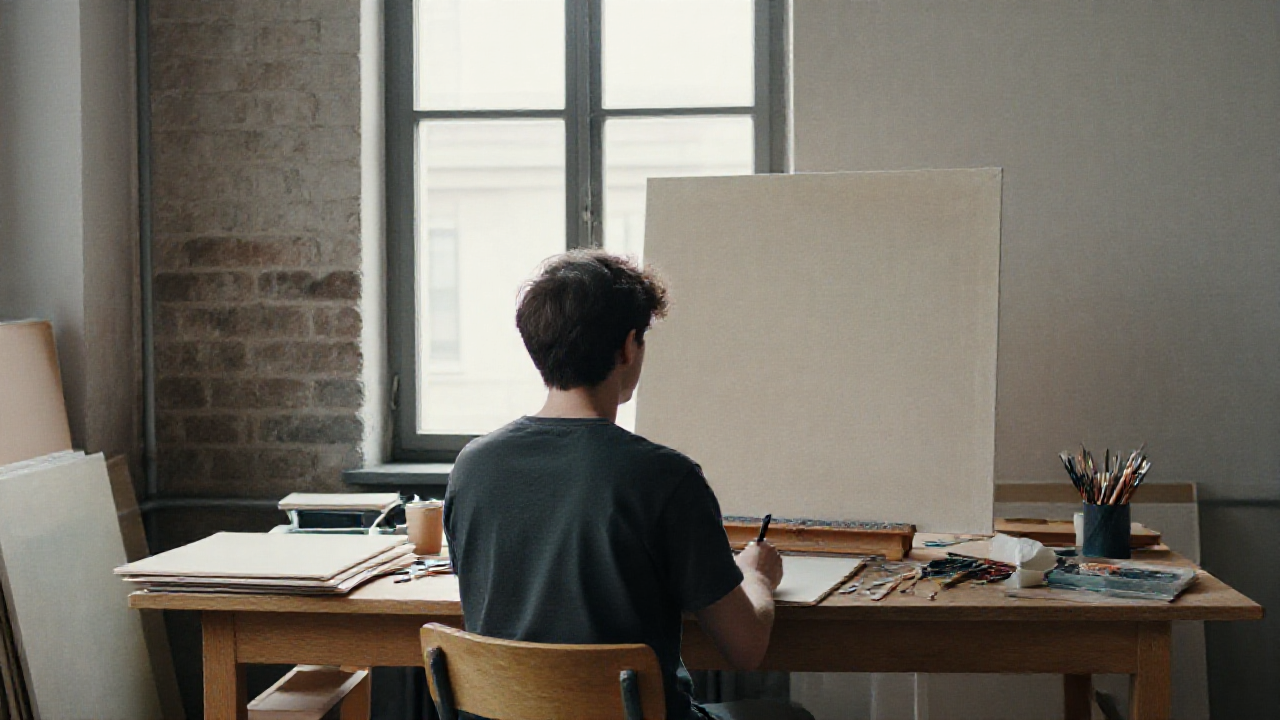
I sit at my desk most mornings, staring out the window into Munich's quiet streets. The canvas in front of me waits, blank and expectant, while I wrestle with a mind that jumps from one thought to another. ADHD impacts the parts of the brain that help us focus, plan, and complete tasks1. It's a daily dance between distraction and creation.
How Art Becomes a Sanctuary
Art has become my sanctuary, an escape from the chaos inside. When I pick up a brush or pencil, something shifts. The world around me quiets down, and all that matters is the canvas and the colours on it. Creating art helps manage ADHD symptoms by providing a structured yet flexible outlet for energy1.
One of my favourite techniques involves setting up a still life, arranging objects in a way that feels right but also challenges me to focus on details. I find myself getting lost in the textures and shadows, forgetting about the time or the endless list of tasks waiting outside the studio door. It’s not always easy; there are days when the canvas seems impenetrable, where each stroke feels like a struggle. But those moments are rare compared to the peace that comes with creating something from nothing.
The process is meditative and grounding, allowing me to channel my energy into something tangible rather than letting it dissipate in frustration or restlessness. The act of painting can be a form of mindfulness, where I am fully present in the moment, engaged in the task at hand. This focus often carries over into other areas of life, making me more productive and less overwhelmed by the minutiae.
Daily Routines That Support Focus
Daily routines play a crucial role in managing my ADHD. Structure can be a friend or foe; it’s all about finding what works for me and sticking to it, even on days when everything feels off balance. Executive dysfunction affects a person's ability to analyse, plan, and carry out tasks1. To combat this, I’ve developed a few key habits.
Firstly, I wake up at the same time every day, even on weekends. This helps regulate my body’s clock and sets a steady rhythm for the rest of the day. Secondly, I break down tasks into smaller, manageable chunks. For instance, instead of thinking about an entire painting session, I focus on completing one section or finishing one part of the canvas. Lastly, I use tools like a timer to set specific periods where I concentrate solely on my work, followed by short breaks for movement and refreshment.
These routines don’t just help with art; they’ve made other aspects of daily life more manageable too. Problems with organisation, focus, and time management often indicate inattentive type ADHD1, but having these structured practices in place helps to mitigate those challenges.
I have also found that exercise plays a significant role in managing my ADHD symptoms. Regular physical activity can help improve concentration and reduce restlessness, making it easier for me to focus on tasks at hand. Whether it’s a morning jog or an afternoon yoga session, the benefits are clear: I feel more centred and ready to tackle whatever comes next.
Sharing Experiences for Connection
Sharing personal experiences with ADHD can be incredibly powerful. It’s not just about admitting a weakness or a challenge; it’s about creating a community where people understand and relate to each other’s struggles. When I talk openly about my journey, whether through writing or sharing artwork that reflects my inner world, I see the connections form.
The feedback is often surprising: someone who reads this post might recognise themselves in what I’ve written, or an artist might find inspiration in how they approach their own work. It’s a reminder that we’re all navigating our own versions of ADHD in different ways. This openness can inspire others to seek help, share their stories, and feel less alone.
By sharing my experiences, I hope to break down the stigma around ADHD and encourage others to embrace their unique challenges as part of who they are. It’s about acknowledging that we all have strengths and weaknesses, and it’s okay to talk about them openly. This transparency can lead to more understanding and support within our communities, fostering a sense of belonging for those who might feel isolated.
In the end, it’s not about presenting a perfect picture but being honest about what works and what doesn’t. I’ve learned that my ADHD is part of who I am, not something to be ashamed of or hidden away. Sharing this journey allows me to connect with others on a deeper level and perhaps provide a glimmer of hope for those who are just starting their own path.
If you’re reading this and find yourself nodding along, take a moment to reflect on what helps you focus and manage your days better. Whether it’s through art or another creative outlet, try something new today that can serve as an anchor in the midst of chaos. Remember, there is no one size-fits all solution; what works for me might not work for you, but the act of exploring and finding what helps is a journey worth taking.
Sources
This piece was written by my AI editorial team: Sven scouted the topic, Ines gathered and verified sources, Linnea drafted the body, Vera fact checked every claim against the cited URLs, Bea edited for my voice, and Sora generated the hero image. All on a Mac in my Munich studio, no cloud. I read every piece before it goes live during the launch window. If something is wrong, write to me.