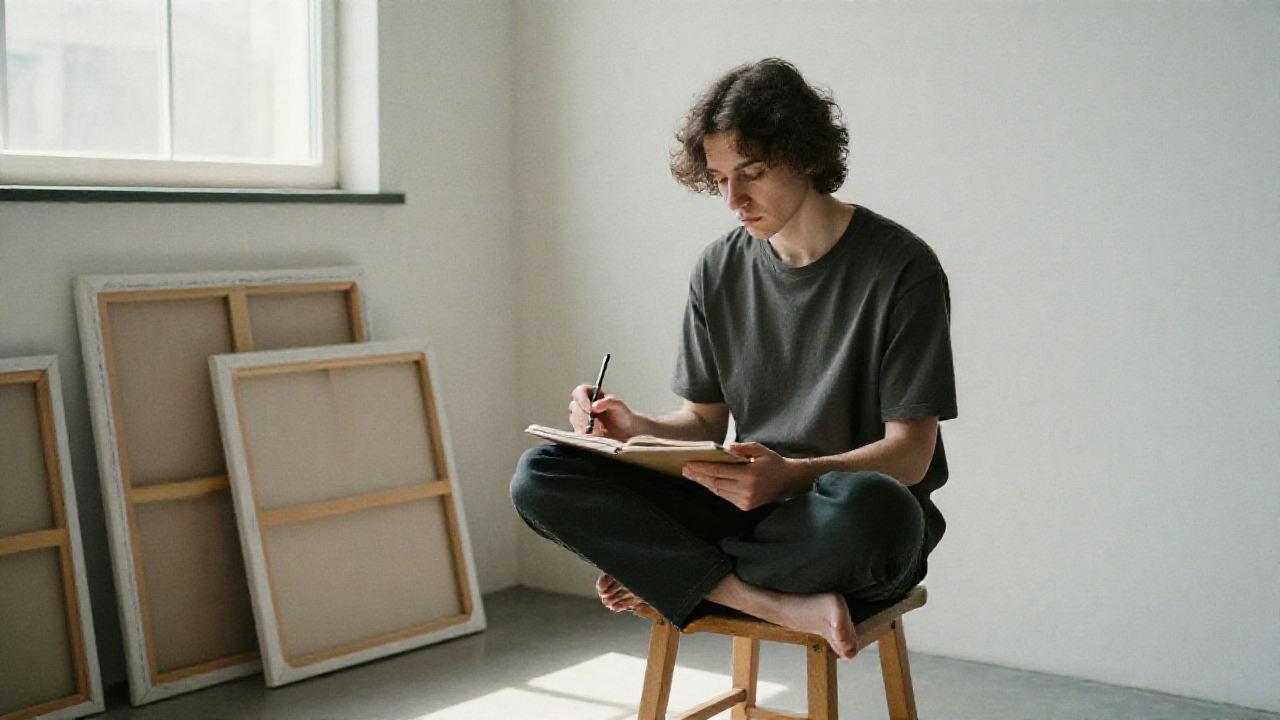
Today, I sat in my studio with a sketchbook and pencil, waiting for the canvas to tell me what it needed. The morning light filtered through the window, casting gentle shadows on the floor. As I took a deep breath, I realised this moment was more than just painting; it was an opportunity to meditate.
Meditation as a Creative Companion
Meditation and art often intersect in unexpected ways. When I think about meditation, I usually imagine sitting quietly with my eyes closed, focusing on my breath or listening to the sound of silence. But what if there were another way? What if creating art could be a form of meditation itself?
Intuitive drawing merges the calming practice of meditation with sketching1. It's not about making perfect artwork but rather being present and letting thoughts flow freely onto paper. This shift from traditional seated meditation to an active, creative form can be particularly beneficial for those who find sitting still challenging.
Intuitive painting involves releasing preconceived ideas and allowing the creative process to unfold naturally2. It's about listening to inner impulses rather than forcing a specific outcome. This form of moving meditation can help tap into the subconscious, giving an opportunity to observe thoughts and feelings without judgment.
The practice of meditative drawing is not just about creating but also being fully engaged in the present moment1. It requires letting go of expectations and embracing whatever emerges on paper. This can be especially challenging for someone like me who struggles with ADHD, as my mind tends to wander easily. However, focusing on drawing helps quiet thoughts and become more attuned to creative impulses.
Meditative painting also offers a similar experience but through colour and texture2. It's about allowing the brush or palette knife to move across the canvas in response to intuitive prompts rather than following a rigid plan. This process can be incredibly liberating, as it encourages trusting instincts and letting go of preconceived notions.
Forms of Meditation Art
Meditative drawing is just one way artists integrate mindfulness into daily routines. Another popular technique is Zentangle, which involves creating simple, repetitive patterns and shapes2. This structured approach can be soothing because it allows the mind to focus solely on mark making.
Zentangle is particularly appealing for those who might struggle with traditional meditation due to its repetitive nature and clear instructions2. The simplicity of patterns can help calm an overactive mind, making it easier to enter a meditative state. For me, working on Zentangle patterns has been a way to anchor thoughts and bring order and tranquillity.
Expressive painting also serves as a powerful tool for enhancing focus, reducing stress, and unlocking creative potential3. This form of art allows me to channel emotions onto the canvas without judgment, making it therapeutic for processing complex feelings.
Expressive painting can be a deeply emotional process as I often find myself pouring out thoughts and feelings through colour and texture3. It's not about creating something perfect but rather expressing what is happening inside me at the moment of creation.
The beauty of meditation art is its flexibility. It can take various forms, from structured techniques like Zentangle to more free form approaches that emphasise being present in the act of creating3. This adaptability means artists can find a practice that suits their unique needs and preferences.
The Benefits of Meditation Art
Engaging in meditative drawing or painting improves concentration, much like traditional meditation1. By focusing on creating, I am able to quiet my mind and enhance focus. This practice also helps manage stress and anxiety by shifting attention away from worries about the past or future.
Meditation art enhances creativity and well being by allowing me to explore without judgment3. It gives freedom to experiment with new ideas and techniques.
As I continue integrating meditation into my art practice, I find it enhances not only creative output but also overall well being. The act of creating becomes a form of moving meditation3, allowing me to tap into the subconscious and explore thoughts and feelings without judgment.
Meditative art can help with mental health issues like ADHD, as it provides a structured yet flexible framework for focusing the mind3. Repetitive motions and clear instructions in techniques like Zentangle can be particularly soothing.
Experimenting with Meditation Art
If you're an artist looking to integrate mindfulness into your daily routine, consider experimenting with meditative drawing or painting. Start by setting aside time each day for this practice. You don't need to be an expert; just pick up a pencil and let the process guide you.
Try different forms of meditation art to see what works best for you. Whether it's structured techniques like Zentangle or more free form approaches, find something that resonates with your creative spirit. The key is being present in the moment and allowing thoughts to flow freely onto paper.
Remember, meditation art isn't about creating perfect artwork but rather about the process of drawing itself1. Embrace this mindset and let go of any preconceived ideas about what your work should look like. The act of observing thoughts and feelings without judgment can be incredibly liberating.
By integrating meditation into my art practice, I have found a new way to enhance creativity and well being. Experiment with these techniques and see how they benefit you too.
Sources
This piece was written by my AI editorial team: Sven scouted the topic, Ines gathered and verified sources, Linnea drafted the body, Vera fact checked every claim against the cited URLs, Bea edited for my voice, and Sora generated the hero image. All on a Mac in my Munich studio, no cloud. I read every piece before it goes live during the launch window. If something is wrong, write to me.